Lithuania showcases innovation and green transition at the 58 EU PA Directors’ Conference in Copenhagen
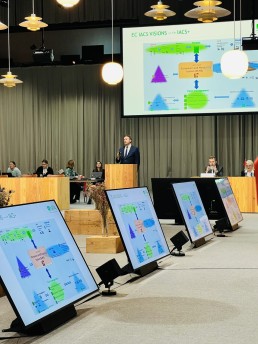
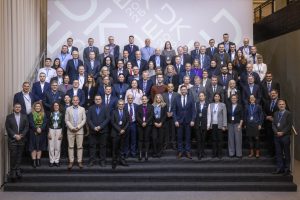
The 58th Conference of EU Paying Agencies Directors took place in Copenhagen, Denmark, on 19–21 November 2025, bringing together the EU Paying Agencies’ senior representatives to discuss innovation, simplification, data governance, and the evolving role of AI in implementing the Common Agricultural Policy (CAP) as well as the future direction of the CAP development, with a strong focus on interoperability, AI applications, and green transition. The representative of the Lithuanian National Paying Agency (NPA) – Deputy Director Tomas Orlickas – took part in the event and familiarised the audience with the NPA achievements in carrying out the multiple objectives of the CAP in Lithuania.
The sessions of the 58th Conference of EU Paying Agencies’ Directors focused on several key themes, including:
• The use of AI in the administration of support schemes;
• Administrative simplification and improved institutional efficiency;
• Modernisation of processes and advancing the green transition in the agricultural sector.
Over three days, delegates engaged in high-level presentations, thematic workshops, pitches and exchanges on best practices – particularly on AI applications, administrative simplification, aerial monitoring, and performance audit findings.
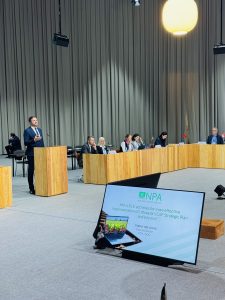
 During the conference a key intervention was made by Tomas Orlickas, Deputy Director of the National Paying Agency (NPA) of Lithuania: “Research and development activities for more effective implementation of Lithuania’s CAP Strategic Plan” In his presentation, Tomas Orlickas highlighted Lithuania’s comprehensive contribution to the EU-funded research, development, and innovation initiatives designed to strengthen the implementation of the CAP Strategic Plan and support the transition towards a more sustainable, modern, and data-driven agricultural sector. The Deputy Director presented Lithuania’s ongoing research and innovation initiatives aimed at improving the efficiency, accuracy, and strategic coherence of the country’s CAP Strategic Plan implementation.
The Deputy Director also pointed out that the NPA’s Research & Development activities are closely aligned with EU priorities for digital transformation, environmental performance, transparency, and administrative efficiency. Tomas Orlickas outlined the importance of environmental monitoring, modelling of agricultural practices and tools that help measure biodiversity, carbon impacts and land-use changes, that are essential for delivering the green architecture of CAP. The showcased key initiatives included a number of projects with a focus on GFarm being among them.
 The Gfarm for Life initiative – together with ESA GTIF and related carbon and GHG monitoring work – aims to design, test, and validate reliable methods for assessing and reporting greenhouse gas (GHG) balances in agriculture, forestry, and other land-use sectors (AFOLU). Key activities include:
- Creating the foundations for a national carbon-sequestration certification scheme, including the technological infrastructure, carbon registry platform, and mechanisms for data exchange and governance.
- Working with policymakers and sector stakeholders to update national GHG accounting approaches, regulatory frameworks, incentive structures, and role assignments.
Project tasks cover the development of methodologies, calculation tools, carbon mapping, as well as demonstrations, training sessions, and e-learning resources. The initiative will establish a system for monitoring soil organic carbon stocks, support the rollout of a carbon certification and monitoring framework, and deploy digital tools that help farmers operate more efficiently while contributing to EU climate-neutrality targets.
Within the project, the NPA is contributing to the development of a free carbon-credit platform, designed to simplify farmers’ participation and enable them to earn additional income. By providing access to open-source data, the project encourages broader farmer involvement and facilitates their ability to benefit from carbon credits.
The presentation was followed by a Q&A session, allowing other Paying Agencies to explore how similar innovation-focused approaches could strengthen CAP implementation across the EU. Overall, the conference underscored a shared commitment among EU Paying Agencies to modernisation, interoperability, and innovation, setting the stage for enhanced collaboration.

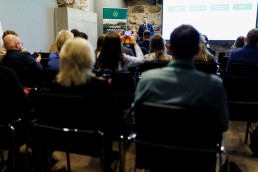
Shaping Climate-Smart Land Management: Reflections from Our Carbon Credits Workshop
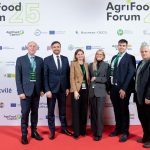
At this year’s AgriFood Forum ’25, our team stepped into one of the most urgent conversations shaping the future of food systems and land use: the evolving role of carbon credits in agriculture and forestry. As the transition toward climate-smart practices accelerates across Europe, the question is no longer if land-based carbon markets will influence agriculture and forestry, but how we prepare ourselves to meaningfully participate in them. This is the question our panel and workshop set out to explore.
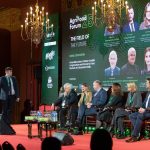
During the Forum, we led the panel “Carbon Credits in Agriculture and Forestry: From Brussels to Lithuanian Fields”and followed it with an interactive, hands-on workshop. The combination attracted a diverse audience: farmers, foresters, agribusiness leaders, NGOs, certification specialists, academics, and public-sector representatives — each with a unique stake in how carbon markets evolve.
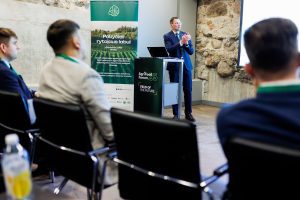 The goal was simple: bring people together to translate EU-level policy discussions into practical, on-the-ground perspectives. The interactive workshop created space for honest dialogue about what carbon credits mean for Lithuania’s landowners and businesses — not in theory, but in day-to-day practice. Participants worked through questions such as:
- How can agricultural and forestry practices be measured as verifiable climate services?
- What does it take for a soil or forest management improvement to qualify for a carbon credit?
- Which certification schemes are trusted, and what do they require?
- How ready are companies to buy land-based credits, and what are they looking for?
What emerged was a shared realisation: carbon credits are not a future vision — they are already reshaping supply chains, investment decisions, and land-use strategies across Europe. Lithuania has a strategic opportunity to position itself well, but only with coordinated action.
The conversations at AgriFood Forum ’25 made one thing clear: Lithuania has a strong foundation for becoming a frontrunner in climate-smart agriculture and forestry. With its scientific expertise, digital readiness, and increasingly engaged landowners, the country is well-positioned to shape credible, transparent, and competitive carbon market solutions.
 But success requires coordinated effort — across sectors, ministries, science institutions, and communities. The Forum discussions were an important step in building this shared understanding.
Carbon credits are often discussed as a technical topic, full of terminology and requirements. But at their core, they are about how we value land, how we support the people who manage it, and how we build systems that reward climate-positive action.
AgriFood Forum ’25 showed that Lithuania is ready to be part of this conversation — not as a follower, but as a contributor and leader.
GFarm Joins CRCF Methodology Development Workshop
The GFarm for LIFE team was proud to participate in the workshop organised within the project “Technical support for the development of carbon farming certification methodologies”, commissioned by DG CLIMA to Wageningen University & Research.
The workshop brought together a wide range of EU-funded initiatives to explore how ongoing research can support the development of certification rules under the new CRCF Regulation.
GFarm for LIFE contributed insights on how integrated monitoring, improved forest management practices and harmonised data systems can help build robust, transparent and resilient carbon-farming methodologies.
During the discussion, the team presented how GFarm’s national-scale MRV approach: combining field data, remote sensing and existing national datasets - can strengthen the evidence base for CRCF implementation. The project demonstrated which improved forest management practices are most effective for increasing long-term carbon removals and boosting ecosystem resilience, including closer-to-nature forestry techniques, enhanced structural diversity, longer rotations and selective harvesting.
GFarm also highlighted the importance of including all major carbon pools: living biomass, deadwood and soils, to avoid trade-offs and ensure realistic accounting. The project further emphasized the need to integrate climate-driven disturbance risks such as drought, fire, storms and pest outbreaks into business-as-usual baselines so that potential carbon benefits are not overstated.
As discussions turned toward baseline approaches, GFarm advocated for regionalised, standardised baselines grounded in existing data systems and complemented by project-specific measurements when necessary. This hybrid approach balances accuracy, comparability and practicality - key principles for CRCF.
Finally, the team showcased how the project’s monitoring tools, data harmonisation efforts and pilots of climate-smart practices contribute to minimum sustainability safeguards, support DNSH compliance and ensure that carbon-farming actions deliver co-benefits for biodiversity, soil health and water retention.
Overall, the workshop provided an excellent opportunity to share GFarm’s progress and learn from fellow EU projects working toward the same goal: building credible, science-based and user-friendly methodologies for future carbon-removal certification across Europe.
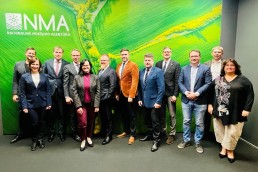
EC representative: NPA is an example to follow
Last week Oliver Sitar, Director of the European Commission’s (EC) Directorate-General for Agriculture and Rural Development (DG Agri), accompanied by representatives of the EC agricultural and rural development policy sector, and of the Ministry of Agriculture, visited the National Paying Agency (NPA) in Lithuania.
The purpose of the visit to the NPA was to familiarise with the institution’s key processes, the principles of EU support administration and monitoring. The EC representative was particularly interested in the NPA as an organisation with its 26 years of experience, annually paying out around 1 billion euros of the EU support to the agricultural sector. In his presentation, NPA Deputy Director Tomas Orlickas explained how the agency’s knowledge and experience have been accumulated, applied and improved on a regular basis, thus shaping the unique history of the NPA’s activities. He also outlined the innovative tools that are actively implemented and used, as well as their benefits and future prospects. The NPA Deputy Director also highlighted the role of international projects with the participation of the NPA. These initiatives play a significant role in further development, testing and introduction of innovations in the daily activities of the institution.
Among the highlighted projects – EU LIFE programme Green Farm for LIFE / ESA GTIF / Carbon & GHG Monitoring (Area Monitoring & Carbon Credits System). The purpose of the project – to develop, pilot and validate accurate assessment and reporting of greenhouse gas (GHG) balances in agriculture, forestry, and land use (AFOLU). The project activities include:
- Designing frameworks for a national carbon absorption certification system, developing technological infrastructure, carbon register / platform, and data exchange / governance;
- Engaging policymakers and stakeholders to adapt national GHG assessment, regulatory needs, incentive systems, and responsibilities.
The project tasks include creating methodologies, calculation tools, carbon maps, demonstrations, training, and e-learning. The project will develop a system for monitoring soil organic carbon storage, fostering a carbon absorption certification and monitoring framework, and implementing digital tools for farmers to improve efficiency and contribute to EU climate neutrality goals. Within the scope of the project, the NPA contributes to developing a free carbon credit platform that will make it easier for farmers to earn additional income. By getting access to open-source data, farmers will be encouraged to participate and benefit from carbon credits.
The guest was especially impressed by the advanced remote monitoring tools that are used and continuously developed by the NPA and expressed his positive view on their further elaboration. This area attracted significant interest and numerous questions from the visitors regarding both the current benefits of these tools – ensuring the quality, efficiency, convenience and reliability of inspections – and their future perspectives. EC representative Oliver Sitar noted that the NPA’s operations and certain processes, particularly inspections, deserve attention across Europe, and that innovative technologies, such as satellite-assisted optimisation of monitoring, should serve as an example for institutions working in the agricultural sectors of other EU Member States. He expressed a firm position that the dialogue between the NPA and EC representatives should continue.
Oliver Sitar’s visit to the NPA was an important part of his broader mission to gain first-hand insight into Lithuania’s agricultural sector, with the aim of ensuring a fair and robust future for the EU Common Agricultural Policy and support conditions in the 2028–2034 financial perspective. The visit was organised by the EC Representation in Lithuania, in cooperation with the Ministry of Agriculture.
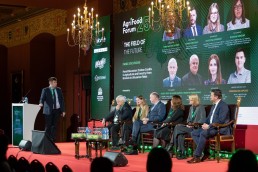
From Brussels to Lithuanian Fields: How Carbon Credits Are Shaping the Future of Agriculture and Forestry
As the European Union accelerates its transition toward climate neutrality, farmers and foresters increasingly find themselves at the center of the discussion. Their lands - our fields and forests - hold some of the strongest potential to remove carbon from the atmosphere. But how will this potential be measured, certified, and rewarded? And what does the new EU Carbon Removals and Carbon Farming Regulation (CRCF) mean in practice for Lithuania and the wider Baltic region?
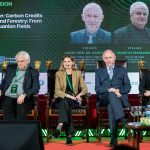
These were the driving questions behind the international initiative GFarm for Life, which hosted a dynamic panel discussion titled “Carbon Credits in Agriculture and Forestry: From Brussels to Lithuanian Fields.” The event brought together EU experts, national policymakers, and practitioners navigating the rapidly evolving carbon farming landscape.
Setting the Scene: EU Pathway to Climate Neutrality
The keynote presentation was delivered by Christian Holzleitner, Head of Unit for Land Economy and Carbon Removals at the European Commission’s DG CLIMA. His intervention provided clarity on where Europe stands today - and where it aims to be within the next three crucial years.
Ch. Holzleitner outlined the EU’s pathway to climate neutrality, highlighting the essential contribution of carbon removals and the need for robust, science-based certification. Under the CRCF Regulation, Europe is laying the groundwork for a transparent system that can reliably measure and verify carbon removals generated by farmers, foresters, and landowners. A few priorities stood out from his presentation:
- Launching the EU market for carbon farming credits – a structure that will allow farmers and foresters to voluntarily enter the system and generate certified credits.
- Diversifying demand – not only from food and biomass processors within the value chain, but also from actors outside it, such as corporate buyers committed to net-zero targets.
- The emergence of the EU Buyers’ Club – an initiative expected to create coordinated, trustworthy demand for high-quality carbon removal credits.
- Clearer guidance coming soon – with the next three years set to define methodologies, monitoring rules, and operational models for large-scale adoption.
Together, these developments signal that carbon farming is shifting from experimental projects to a structured and regulated market opportunity.
A Regional Conversation With European Relevance
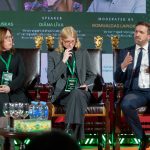
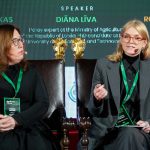
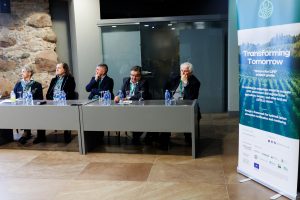
Following the keynote, an outstanding panel of experts explored how these European developments translate into national policies and concrete actions on the ground. The panel brought together: Tomas Orlickas – National Paying Agency (Lithuania), Krystyna Springer – Institute for European Environmental Policy (IEEP), Rovena Grikienė – Ministry of Agriculture of the Republic of Lithuania, Algis Gaizutis – Forest and Land Owners Association of Lithuania (FOAL), Diāna Līva – Ministry of Agriculture of the Republic of Latvia, Eimantas Pranauskas – Lithuanian Association of Agricultural Companies. Moderated by: Romualdas Lapickis (AgriFood Lithuania)
The conversation surfaced a shared understanding: carbon farming and removals offer significant environmental and economic opportunities, but only with clear rules, effective monitoring, and stable incentives. Among the key themes discussed were:
- How national administrations are preparing to implement the CRCF framework.
- The readiness of farmers and foresters to participate in voluntary carbon markets.
- The importance of building trust: transparency, verification, and long-term certainty for credit buyers.
- The unique Baltic perspective, including cross-border collaboration and shared ecosystem challenges.
Why This Discussion Matters
Carbon farming is more than a policy tool—it is becoming a new economic activity that can reward land managers for practices that enhance soil health, increase carbon sequestration, and support biodiversity.
For Lithuania and neighboring countries, this shift offers both opportunities and responsibilities: Opportunities to attract investment, strengthen rural economies, diversify farm income, and scale nature-based solutions. Responsibilities to ensure land practices are sustainable, measurable, and aligned with broader climate objectives.
The GFarm for Life discussion highlighted that success will rely on cooperation across sectors—policy, science, farming communities, and industry.
Moving Forward
As Europe enters a new phase of climate action, the agriculture and forestry sectors have a chance to lead. With the CRCF Regulation setting the rules, and demand for carbon removals growing rapidly, farmers and foresters can become essential partners in delivering climate neutrality. Events like this one - bridging Brussels and Lithuanian fields - play a crucial role in ensuring that the transition is informed, inclusive, and grounded in real-world experiences.